From Pittsfield to the Moon
WAMC radio is spotlighting the role Electro Magnetic Applications, Inc.’s (EMA’s) Space Environment and Radiation Effects (SERE) Laboratory in Pittsfield, Mass. is contributing to NASA’s historic Artemis space missions.
The story explores how advanced electromagnetic testing and analysis is helping support spacecraft reliability and performance, demonstrating how critical technical work done in the Berkshires is reaching far beyond Earth.
Listen to or read the full story on WAMC by clicking here.
In April 2026, EMA shared that it’s teaming up with Synopsys and NASA’s Johnson Space Center to help make sure spacesuits can safely operate in the lunar environment as part of NASA’s Artemis missions. The work focuses on reducing risk to spacesuits from electrical charging and electrostatic discharge (ESD) caused by space plasma and lunar dust.
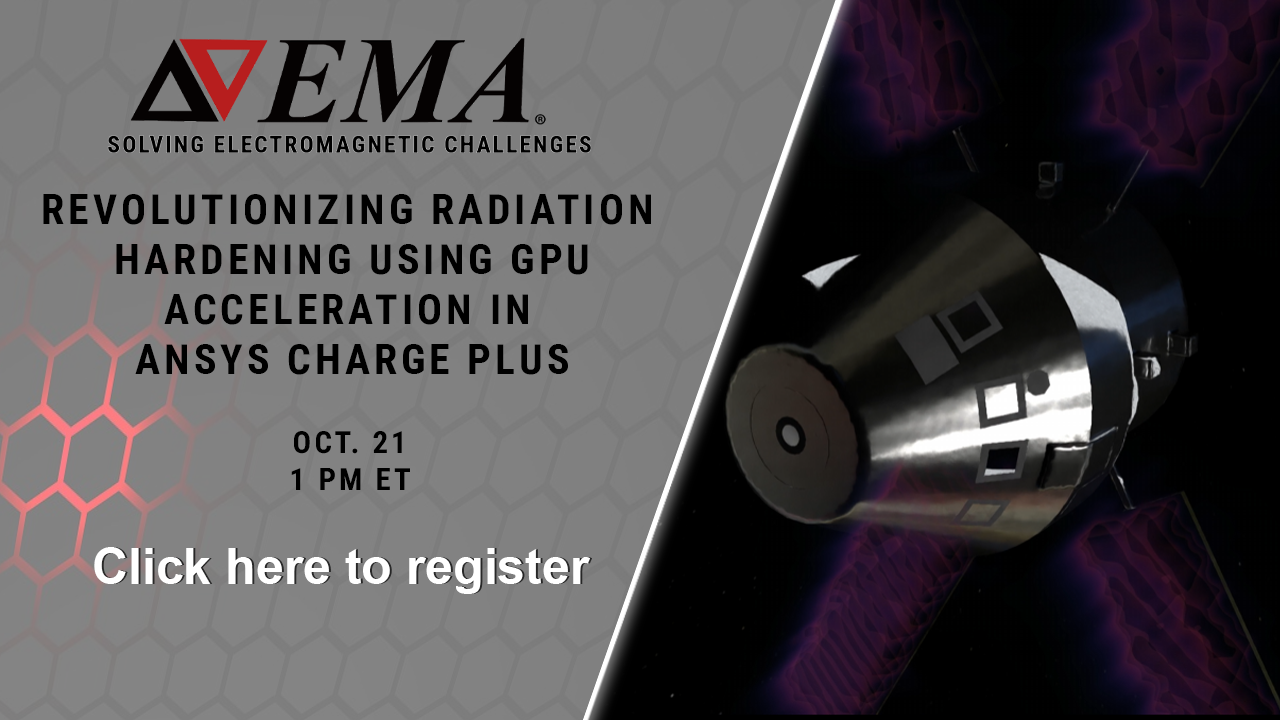
EMA will use the advanced simulation software, Ansys Charge Plus, to study how spacesuit materials and layers behave in the Moon’s plasma environment. The tool identifies potential charging and discharge risks caused by space plasma and lunar dust, and it is currently the only commercial software that addresses these complex space-charging challenges in 3D.
Hands-on testing at the SERE Lab backs these simulations, with the lab recreating key space plasma conditions in Earth. EMA will study how lunar dust transfers electrical charge to spacesuit materials, helping capture real-world effects that are hard to predict with modeling alone. The team uses the test data to improve and validate the simulations, increasing accuracy and reliability.
Artemis III is scheduled to launch in mid-2027 with Artemis IV landing on the Moon in 2028. It will be the first lunar landing since Apollo 17 in 1972.